

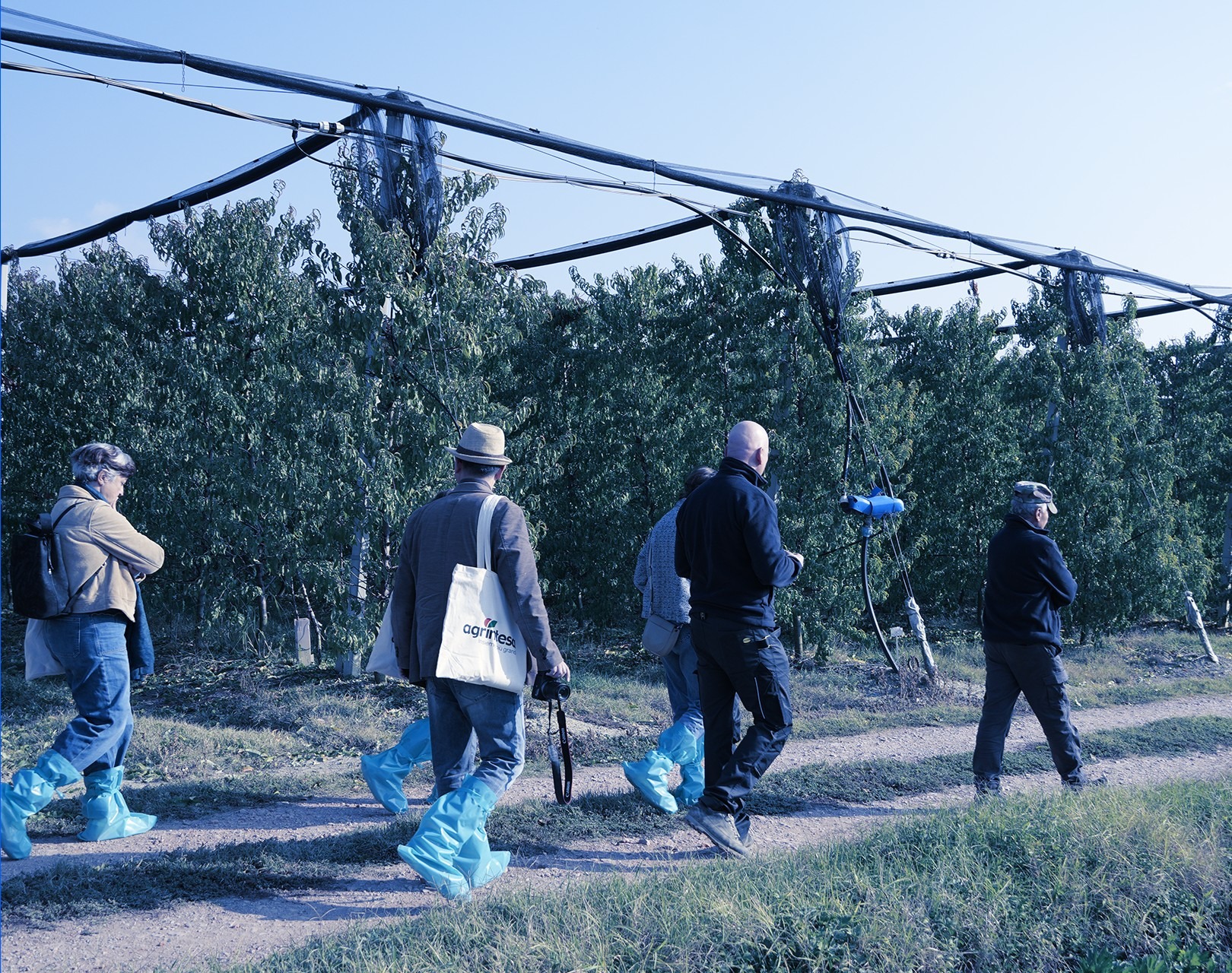
From conference discussions to working farms, AGRAYA SUMMIT 2026 continued beyond the Bologna Congress Center. On 29 October, attendees headed into Italy’s Emilia-Romagna region to experience agriculture firsthand, visiting three family-run farms and meeting the producers behind their operations.
The visits brought the challenges and innovations discussed at the SUMMIT to life. From protecting orchards against extreme weather to using precision irrigation and modern production technologies, attendees gained a closer look at how farmers are adapting their practices and managing resources.
The experience also highlighted the important role of agricultural cooperatives in connecting producers with technical expertise, resources, and markets. Each visit offered a different perspective on farming in practice, bringing the SUMMIT’s conversations closer to the people and businesses at the heart of agriculture.
Guerrini Daniele e Davide: Tackling climate challenges through technology and cooperation
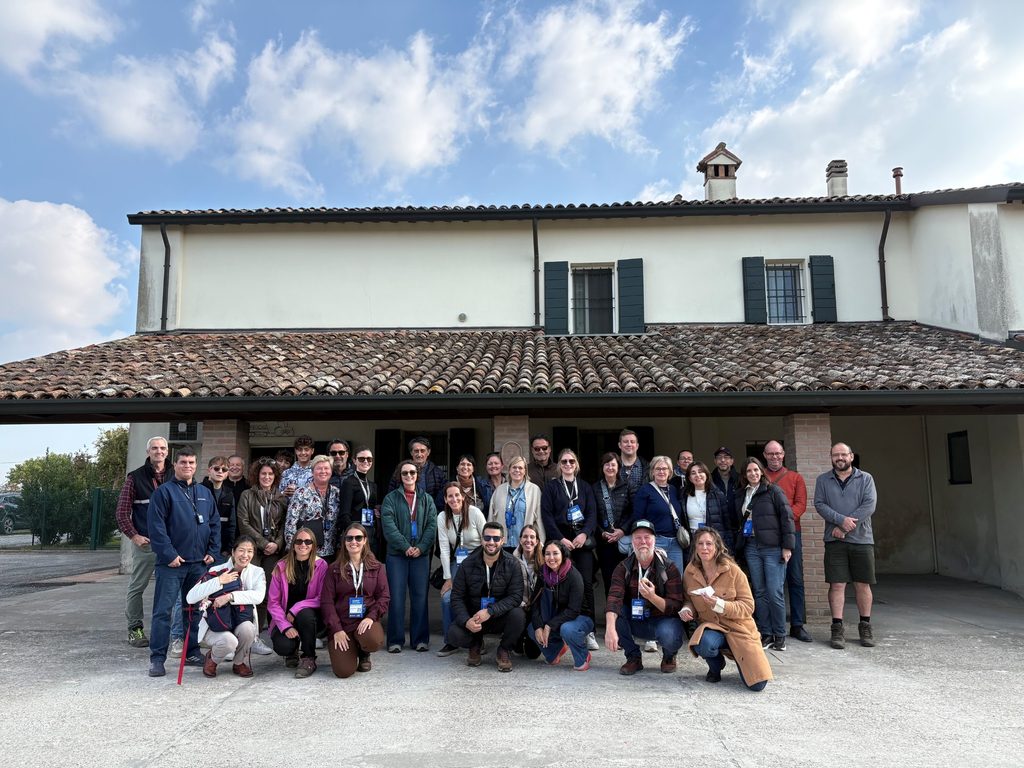
Welcomed by Apofruit Italia President Mirko Zanotti, attendees began their visit with an introduction to the cooperative’s work before heading into the apple orchards for a closer look at production practices.
Located in Piangipane, near Ravenna, Guerrini Daniele e Davide is a family-run fruit farm operated by brothers Daniele and Davide Guerrini, who took over the business from their father Discoride, in 1998. The farm produces apples, pears, plums, and peaches across approximately 20.5 hectares, with annual production averaging 950 to 1,000 tons.
One of the farm’s biggest challenges is spring frost, which can damage fruit crops during flowering. Working together with a neighboring farm, the brothers invested in frost-protection fans to help protect their orchards. The importance of managing extreme weather was particularly evident following severe flooding in the region in 2023 and frost damage in subsequent years.
Attendees also learned about the farm’s approach to crop protection and resource management. Anti-hail and insect-proof netting, integrated pest management techniques, and bumblebee hives support production, while drip irrigation and a weather station connected to BLUELEAF software help the farmers make informed decisions about water use and crop protection.
The farm has been a member of Apofruit Italia since 2004 and has held GLOBALG.A.P. Integrated Farm Assurance (IFA) certification since 2006, alongside the GRASP and SPRING add-ons.
During the visit, Apofruit Italia’s quality management team provided insights into how the cooperative supports its producer members. The team includes Kirenia Cappelli, Quality Manager, and Massimiliano Laghi, General Manager of Quality.
The cooperative explained how its GLOBALG.A.P. IFA Option 2 certification is supported by internal audits, annual producer training, and technical assistance. Particular attention was given to practical requirements such as farm risk assessments, farm maps, and worker welfare practices.
Digitalization was another topic of discussion. While the cooperative is gradually moving toward digital recordkeeping, limited internet connectivity at some farms means paper-based documentation remains important.
The visit offered a practical example of how family farms can combine technology, shared investments, and cooperative support to manage agricultural challenges.
Azienda Agricola Tagliavini: Bringing farming traditions into the future
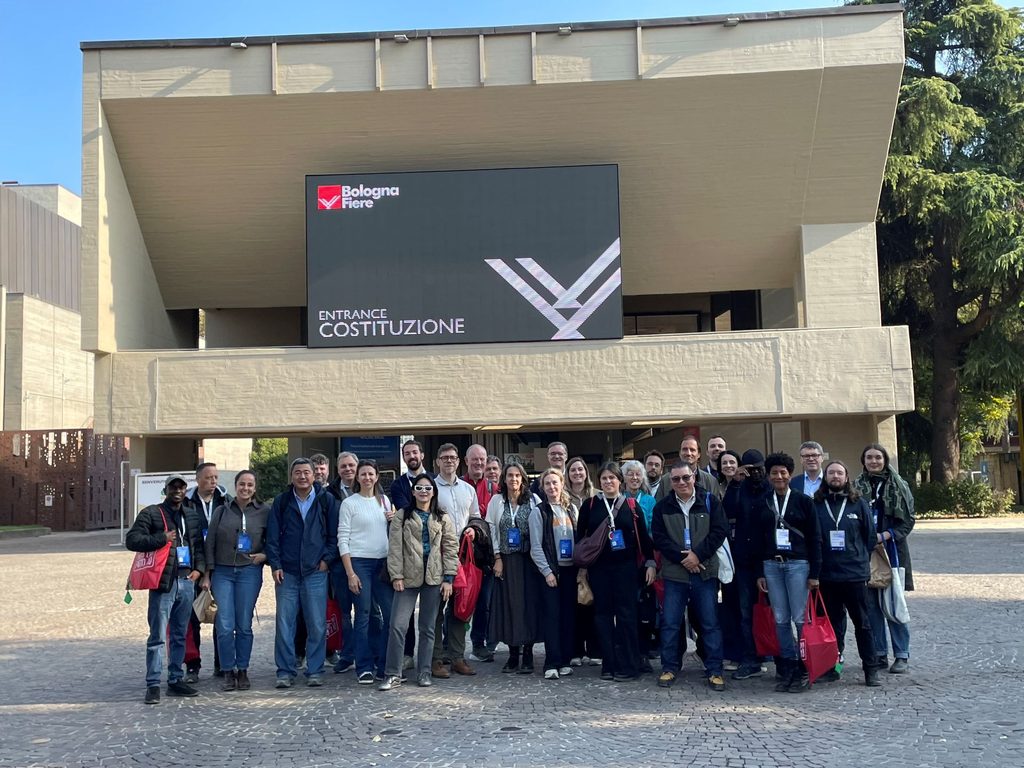
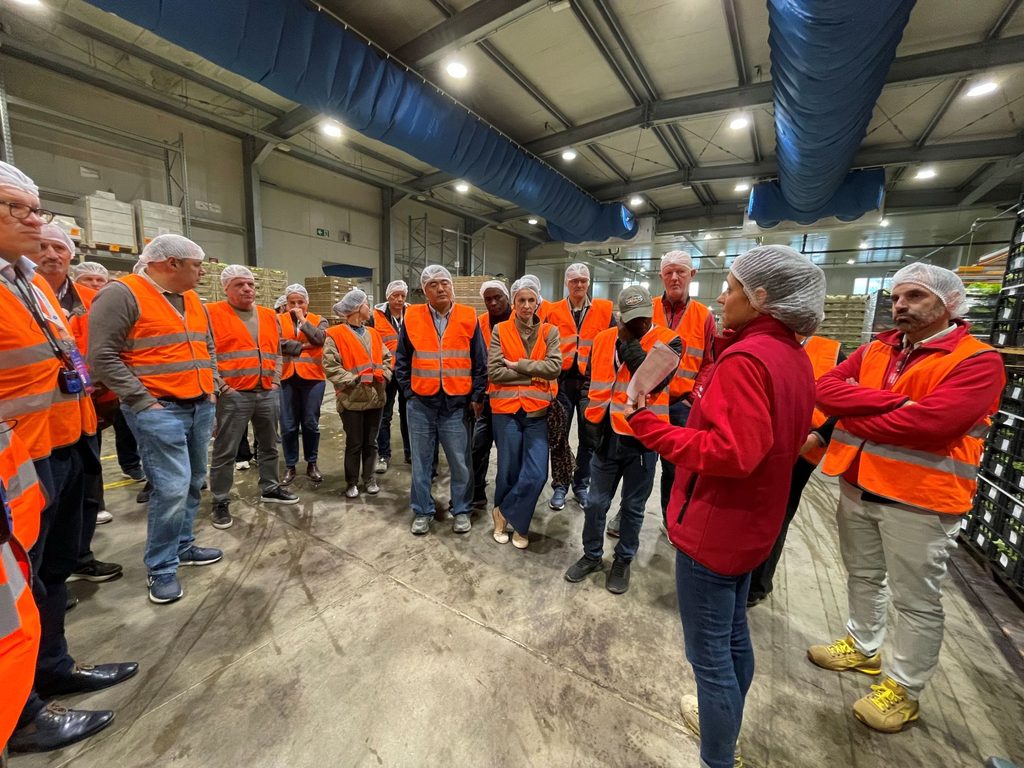
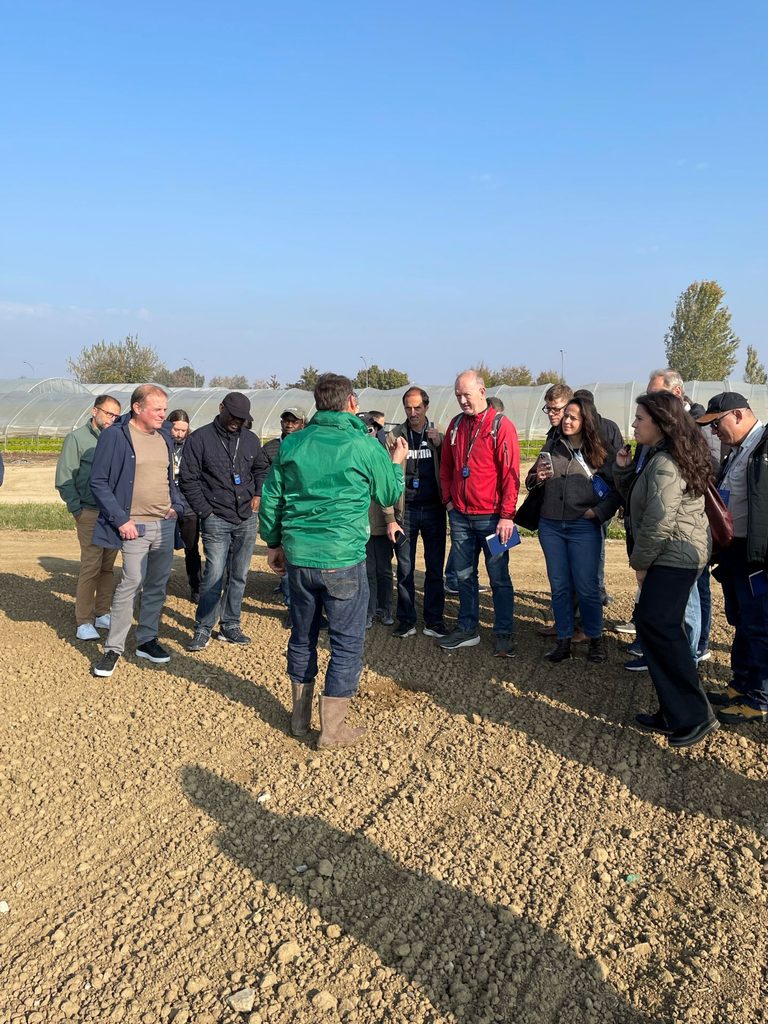
At Azienda Agricola Tagliavini, near Bologna, attendees discovered a family farming business with roots stretching back to 1888.
Today, brothers Matteo and Alessandro Tagliavini run the farm, which has evolved from wheat and sugar beet cultivation to specializing in lettuce and Zucchina Chiara di Bologna, a traditional local zucchini variety.
Across approximately 53 hectares of production area, including successive crops and greenhouses, the farm produced around 850 tons of fresh vegetables in 2025. Production continues for 11 months of the year, with delicate crops harvested by hand and often dispatched on the same day.
A particular focus of the visit was water management. With increasingly hot and dry summers presenting challenges for vegetable production, the farm uses precision drip irrigation and soil moisture sensors to monitor conditions and adjust water use according to crop requirements. Crop rotation, integrated pest management, and solar panels also form part of its operations.
The Tagliavini family is a member of Consorzio Agribologna, a cooperative established in 1997 that brings together 85 agricultural businesses across seven Italian regions.
Through the cooperative, members can concentrate on producing a smaller range of crops while benefiting from coordinated planning, technical assistance, marketing, and distribution. This approach creates opportunities for greater specialization, stronger bargaining power, and access to wider markets.
Farm assurance was another important topic during the visit. Approximately 50% of Agribologna’s member farms are GLOBALG.A.P. certified, accounting for around 80% of its production. The cooperative highlighted how GLOBALG.A.P. standards support structured farm operations and help producers address environmental and social topics, alongside meeting market requirements.
With more than a century of agricultural history, the Tagliavini family showed attendees how they continue to evolve through innovation, resource management, and cooperative partnerships.
Carrelli Società Agricola: Four generations of farming and innovation
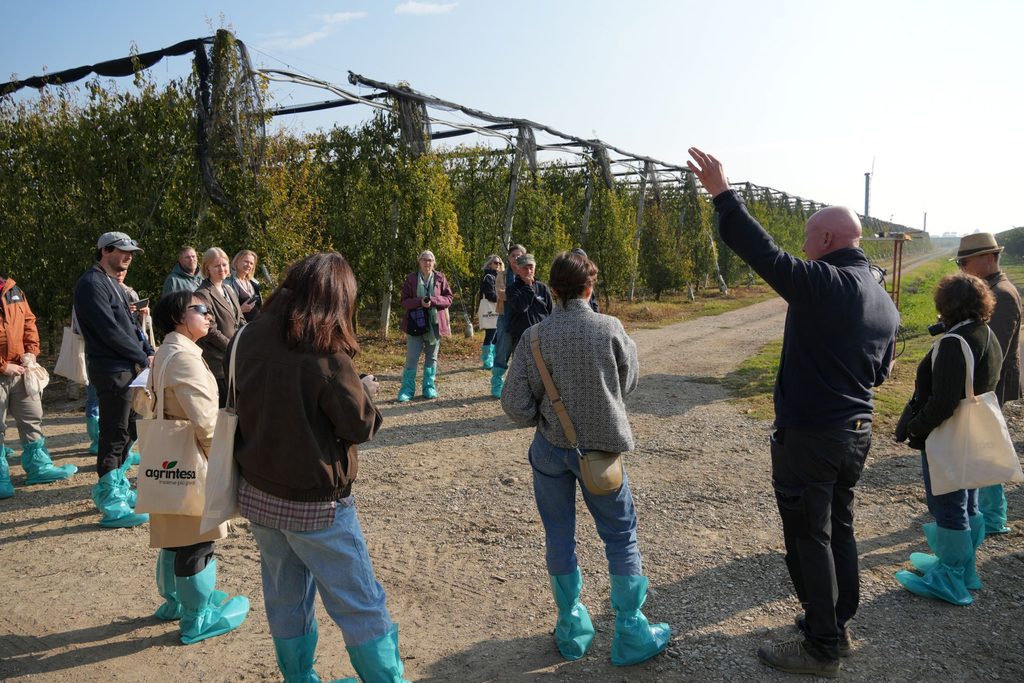
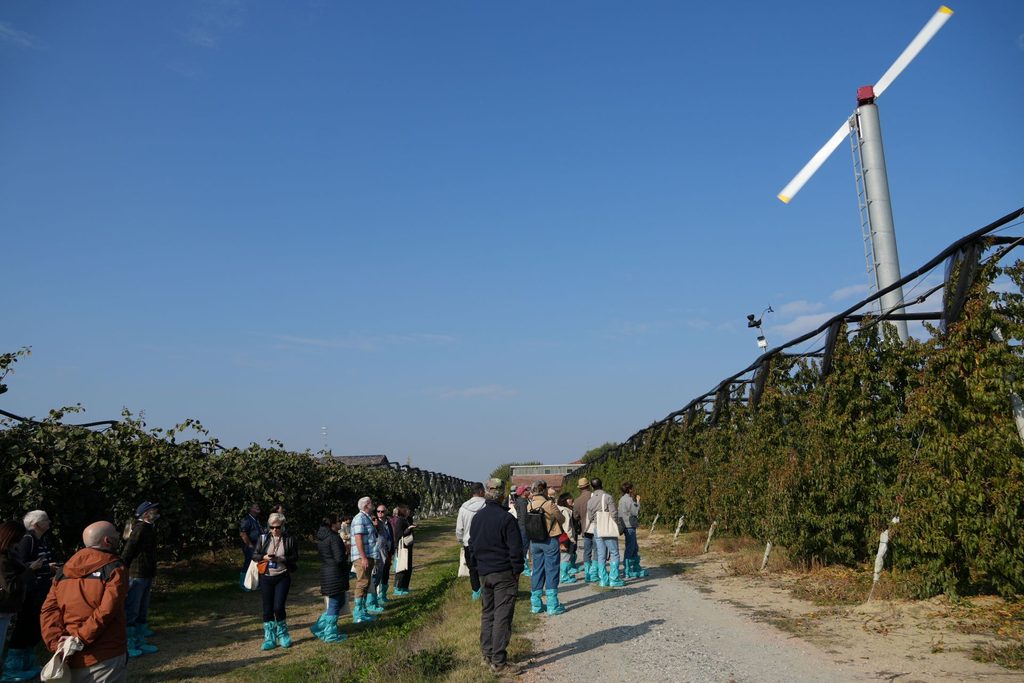
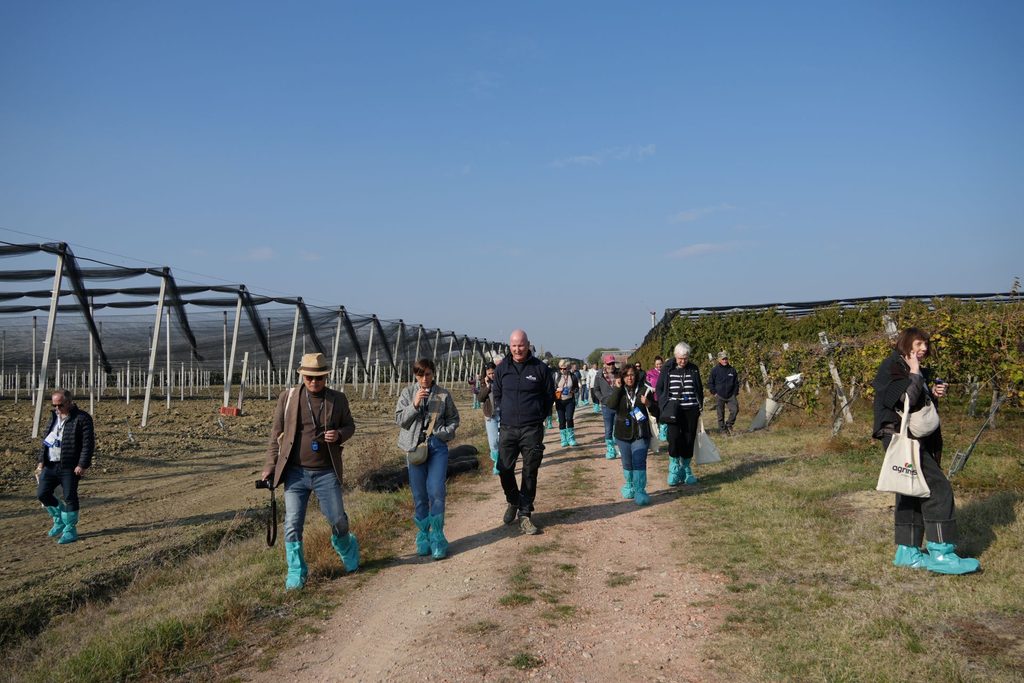
In Castel Bolognese, near Ravenna, attendees visited Carrelli Società Agricola, where four generations of farming experience meet an ongoing interest in new agricultural technologies and production methods.
Managed by Mirco Carrelli and his father Giuseppe, the farm was formally established in its current structure in 2004, although the family’s agricultural roots go back much further. Today, the approximately 20-hectare business produces nectarines, plums, green and yellow kiwifruit, and wine grapes.
The visit offered insights into how the family is adapting its operations to changing weather conditions. Frost-protection fans that operate without water help manage the risk of spring frosts, while a weather station and soil moisture sensors support irrigation decisions.
Other measures include anti-hail and insect-proof netting, resistant crop varieties, and integrated pest management techniques. The farm also maintains grass cover between orchard rows and uses mechanical mowing to support soil health.
Innovation extends to the equipment used on the farm, with hybrid and electric machinery introduced to reduce reliance on fossil fuels and improve working conditions.
The Carrelli family is a member of Agrintesa, an agricultural cooperative specializing in fruit, vegetables, and wine. Established in 2007 through the merger of three cooperatives in Emilia-Romagna, Agrintesa supports its producer members through technical expertise, production planning, and access to markets.
Its specialists provide guidance on topics such as crop protection, irrigation, plant nutrition, and varietal selection, helping producers respond to evolving production requirements.
For attendees, the visit offered a closer look at how farming knowledge passed down through generations can be combined with new technologies and cooperative expertise to address today’s agricultural challenges.
Bringing the SUMMIT conversations to the field
Three farms, different crops, and distinct approaches to production, but several common priorities emerged throughout the visits. Managing weather-related risks, using water and soil resources efficiently, and finding practical applications for new technologies were central to the experiences shared by the producers.
The visits also demonstrated the value of cooperation, whether through neighboring farms investing in equipment together or agricultural cooperatives providing technical support and access to markets.
Most importantly, the farm visits brought the discussions from AGRAYA SUMMIT 2026 into a real-world setting. By meeting producers and learning about their operations firsthand, attendees gained new perspectives on the opportunities and challenges facing agriculture and the practical approaches being developed to address them.
Related links
- Discover the Changemaker Awards 2026 winners
- Discover the very first winner of the Agraya Person of the Year Award
- Explore more about Agraya and what drives us
