

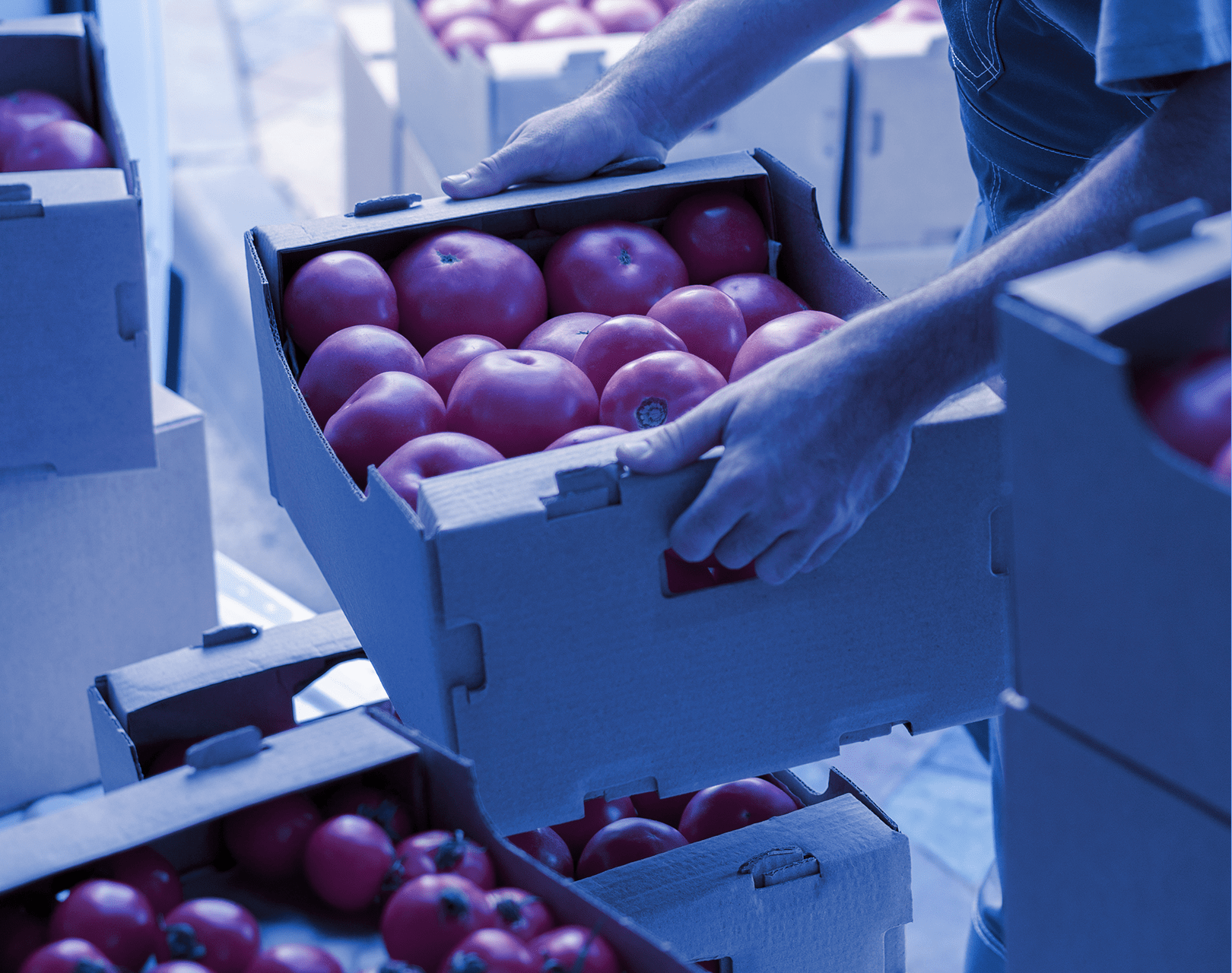
New European Union rules on packaging and packaging waste are now applicable, introducing requirements that will progressively change how packaging is designed, used, labelled, and managed across the EU.
The Packaging and Packaging Waste Regulation (PPWR), Regulation (EU) 2025/40, applies from 12 August 2026 and replaces the previous Directive. For the agricultural sector, where packaging plays an important role in protecting products, maintaining food safety, and facilitating transport, the regulation brings new considerations for businesses supplying the EU market.
What does the PPWR introduce?
The PPWR aims to reduce the environmental and health impacts of packaging and support the transition towards a circular economy. It applies broadly to all packaging and packaging waste placed on the EU market, with requirements being phased in through to 2040.
Key measures include:
- Reducing unnecessary packaging, in terms of quantity, weight, and volume and certain single-use packaging formats
- Limiting substances such as PFAS and heavy metals in packaging
- Increasing packaging recyclability and minimum recycled content where applicable
- Introducing requirements for reusable and compostable packaging
- Introducing labelling requirements to support correct sorting and reuse
The regulation also contains provisions specifically relevant to fresh produce. Certain packaging formats for fresh fruit and vegetables will be restricted from 2030, subject to exemptions, while sticky labels attached to fruit and vegetables will need to meet compostability requirements.
Further guidance is expected by 12 February 2027, when the European Commission is required to provide more detail on the Annex V restrictions, including examples of packaging formats in scope and a non-exhaustive list of fruit and vegetables excluded from the relevant restriction.
How does this relate to GLOBALG.A.P. certification?
Compliance with applicable legislation is already addressed within GLOBALG.A.P. solutions. Several existing requirements also cover areas relevant to packaging management. Some relevant examples across GLOBALG.A.P. Integrated Farm Assurance (IFA) for plants v6, aquaculture v6, Compound Feed Manufacturing (CFM) v3.1, and Produce Handling Assurance (PHA) v1.2 include requirements relating to:
- Packaging being suitable for its intended use (FV-GFS 33.01.04; FV-Smart 33.01.03; HOP 33.01.06; CC 31.02.02; CFM A7.12.1; PPM 08.08 (plastics); PHA 4.1)
- Appropriate final product labelling (FV-GFS 33.05.01; FV-Smart 33.05.01; HOP 33.05.01; PHA 3.2)
- Specifications and procedures for materials, including packaging (FV-GFS and FV-Smart 05.01; HOP 05.01; CC 31.02.02; AQ-GFS and AQ-Smart 17.01; CFM C3.4.2; PPM 08.08 (plastics); PHA 3.1)
- Systems addressing food fraud, including the origin of packaging (FV-GFS and FV-Smart 16.01; HOP 16.01; CC 15.01; CfP AF16.1; AQ-GFS and AQ-Smart 16.01; PHA 1.3.1)
- Traceability (FV-GFS and FV-Smart 06.01; HOP 06.01; CC 05.01; AQ-GFS and AQ-Smart 28.03.04; FO 02.01.01; PHA 7.1)
Preparing for the transition
GLOBALG.A.P. certification does not replace an organization’s responsibility to comply with the PPWR. However, established processes for managing packaging specifications, suppliers, documentation, and legal requirements can provide a useful foundation as businesses assess and implement the new requirements.
With different PPWR provisions taking effect between 2026 and 2040, understanding which requirements apply and when will be important for producers and supply chain stakeholders supplying the EU market. Agraya will continue to follow regulatory developments relevant to GLOBALG.A.P. certified producers and supply chain stakeholders.
Related links
- Explore the European Commission’s new packaging regulation
- Learn more about the new PPWR requirements
- Discover how GLOBALG.A.P. standards are developed
