

Founded in 1990, the International Food and Agribusiness Management Association (IFAMA) is a global non-profit that brings together business, academic, and government leaders from over 80 countries. With the aim to strengthen strategic thinking across the food and agribusiness value chain, its annual World Conference is a valuable forum for dialogue and exchange with a broad cross-section of the agri-food ecosystem.
The 2026 event – held in Cork, Ireland from 15–18 June – was attended by Agraya GmbH Chief Commercial Officer Wouter Conradie and Chief Executive Officer Elmé Coetzer-Boersma, who shares her reflections from their first time at the conference in this article.
Space for exchange
In the opening session, former President Aidan Connolly quoted Mary Shelman, describing IFAMA as the “world’s clearing house for agri-food business.”
While this captures the ambition of the platform, the reality is more nuanced. IFAMA provides a space for exchange, bringing together academia, industry, and policy voices, but it is not a single locus of truth or alignment. Rather, it reflects the diversity, and at times fragmentation of perspectives across the sector. This, in itself, is valuable.
Emerging themes across the value chain
What stood out was the degree of overlap in the questions being asked across the value chain. Climate change, shifting market conditions, technological disruption, and economic viability remain central concerns. However, while these topics are widely acknowledged, there is less clarity on how responsibilities and risks are distributed in practice. The repeated question remains: Who ultimately carries the cost of transition?
Artificial Intelligence featured prominently in discussions. Yet, despite the volume of conversation, there is no clear consensus on its role. Views ranged from cautious optimism to concern about unintended consequences. It is evident that AI, like any tool, will reflect the intent and governance structures behind its use. Its value will depend less on its technical potential and more on how deliberately it is applied within the agricultural context.
A recurring statement throughout the conference was that food production is non-negotiable. People need to eat, and farming must remain viable. While this is self-evident, the more complex challenge lies in making agriculture economically sustainable while meeting environmental and social expectations. Discussions around “sustainable farming” often assume alignment between these goals, yet trade-offs remain insufficiently addressed. In some cases, the implementation of one positive practice may inadvertently undermine another, highlighting the need for more integrated and system-level approaches.
Supporting the next generation
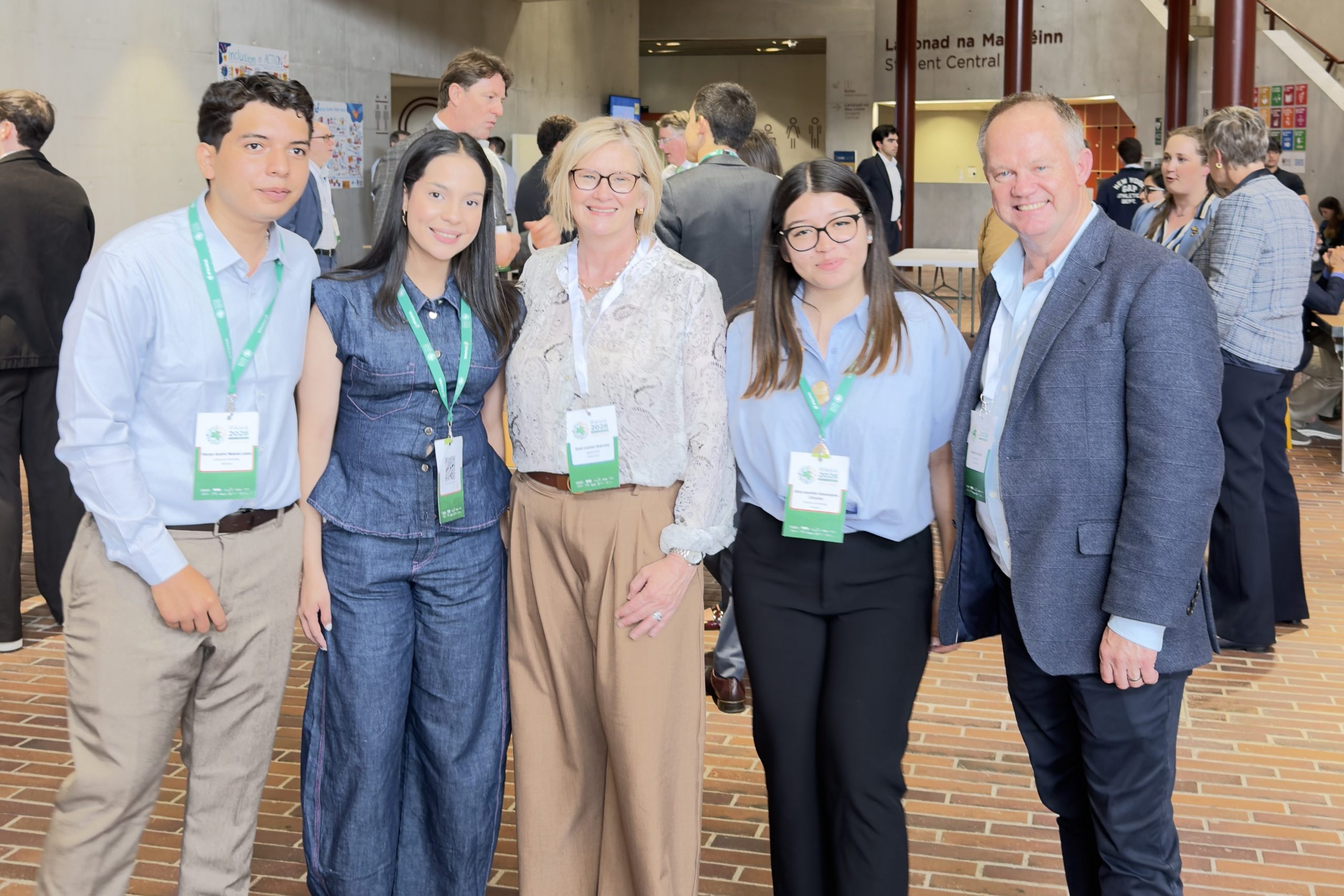
A particularly meaningful moment for me was meeting the students from Zamorano University in Honduras, winners of the IFAMA Global Network Business Venture Challenge that we sponsored in November 2025.
The competition brought together 27 teams from across six continents to develop farmer-centred solutions that Agraya could scale in agricultural contexts, and the Zamorano team came out on top.
The Young Board’s speed networking session demonstrated the value of connecting emerging talent with industry leaders. It also reinforced a broader point: the future of agriculture depends on multidisciplinary thinking. Agriculture cannot afford to operate in silos – whether between production, technology, finance, or policy. Expanding such exposure beyond agribusiness students to all agricultural disciplines would strengthen this integration further.
From dialogue to action
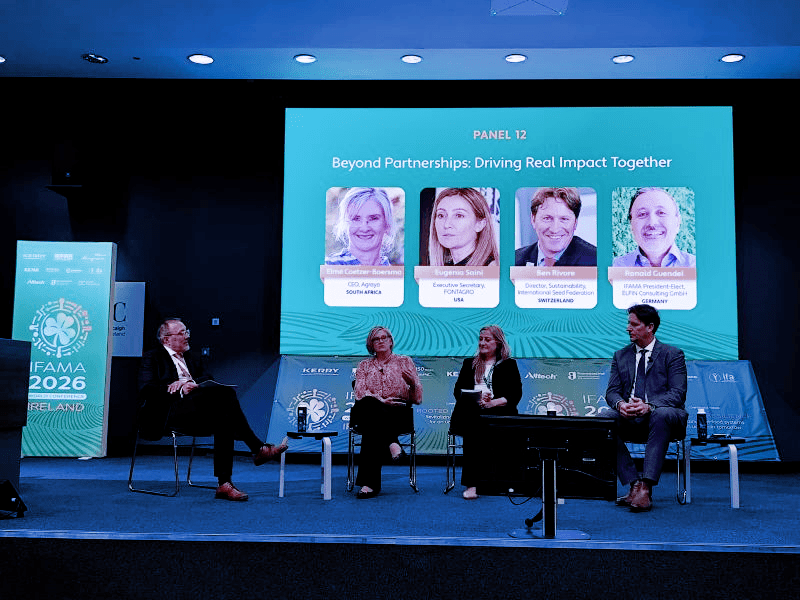
I also had the opportunity to participate in the closing panel, moderated by incoming IFAMA President Ronald Guendel, focusing on collaboration. Collaboration is frequently referenced, yet often underdefined. It is not a structure or a forum; it is an ongoing process that requires alignment, trust, and sustained effort. If IFAMA is to advance this agenda meaningfully, the emphasis will need to shift from dialogue to measurable collective action.
Across the conference, there was a sense of convergence in the questions being asked, if not yet in the answers. This reflects a sector that is increasingly interdependent but still navigating how to act coherently.
This brought me back to a reflection from our SUMMIT in Warsaw in 2024, inspired by Nobel laureate Ilya Prigogine. In complex and sometimes chaotic systems, small “islands of coherence” – groups of actors who are aligned in purpose and action – can initiate broader systemic shifts. IFAMA may not yet represent such coherence at scale, but it offers a platform where these aligned pockets can emerge.
If we are indeed moving towards a phase where alignment becomes possible, the focus must now be on translating shared concern into coordinated action. Strengthening agriculture will require more than agreement on challenges and it will depend on the willingness to act together, deliberately and consistently.
Related links
- Read more about the IFAMA 2025 Venture Building Challenge
- Connect with us at upcoming events
- Continue the conversation with Agraya team at the AGRAYA SUMMIT 2026
