

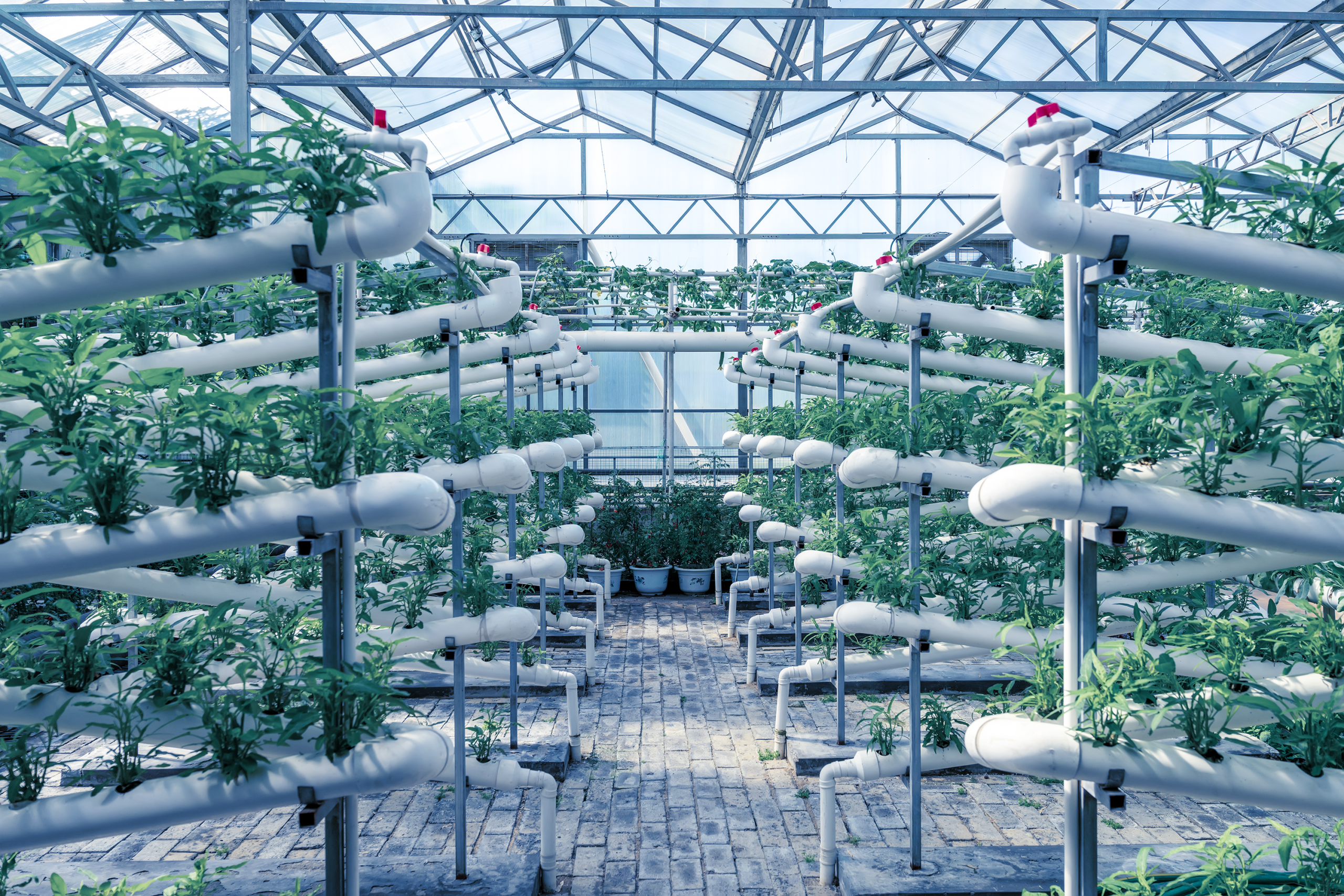
In the third article of our guest series on Controlled Environment Agriculture (CEA), Dr. Emilia Mikulewicz explores how without appropriate controls, the same structure that increases precision can simultaneously replicate errors in water and nutrient solution distribution.
In CEA, if a dosing error, filtration failure, or sanitary breach enters a shared circuit, the problem does not remain abstract. It is transported through the system. If a producer cannot demonstrate which zones were exposed, how long the deviation persisted, and when the system returned to baseline, the issue is no longer purely technical. It becomes a matter of traceability.
Why infrastructure defines exposure
Water and nutrient solution are carriers of exposure, decisions, and evidence. Water sources, mixing tanks, supply lines, emitters, drains, return loops, filters, disinfection units, and sampling points form a structure through which a deviation can propagate. The same infrastructure that increases precision can simultaneously replicate an error and escalate it.
For this reason, nutrient solution control cannot be reduced to a recipe. It must include sampling points, reporting units, escalation thresholds, corrective actions, and verification of effectiveness. Infrastructure without a coherent evidence logic does not reduce risk, but distributes it.
At this point, agronomy intersects with standard and audit requirements. A producer may detect a pH deviation in return water and correct it quickly. However, if the exact origin of the reading is unknown, and harvests are pooled from multiple blocks, it is not possible to determine which lots were affected. In practice, this means that the risk cannot be confined to a specific part of production, nor can the situation be defended during an audit.
Where systems typically fail
The most common weakness identified during audits is not the absence of measurements, but the absence of assignable evidence.
- Origin of sampling
An EC (electrical conductivity) or pH reading has value only when its origin and operational unit are clearly defined. A sample taken from a mixing tank, supply line, emitter, drain, or return loop does not provide the same results. - Timing of sampling
The timing is equally critical. A value recorded after acid correction does not demonstrate that plants were not previously exposed to elevated pH. Likewise, monthly water consumption may appear acceptable while masking flushes, sanitary discharges, emergency corrections, and start-up losses.
These conditions determine whether a system genuinely controls water and nutrient solution quality within the production process. If a result cannot be linked to a specific process point, time, threshold, action, and production lot, it remains an observation rather than evidence of control.
Observation versus control
A facility may display stable EC, acceptable pH, low freshwater use, and high recirculation rates. On paper, the system appears precise. In practice, however, it may remain weak where control is actually tested.
Audit-ready monitoring does not begin with more sensors. It begins with a stable evidence logic:
- Consistent reporting unit
The reporting unit must be consistent. Monitoring, corrective actions, verification, and lot linkage should operate within the same operational structure. If water data is collected by room, corrections are recorded by tank, crop observations are interpreted by block, and commercial lots are assembled from multiple tables, the system loses the coherence required for verification. - Predefined sampling points
Sampling points must be predefined, not selected ad hoc. Source water, treated water, nutrient solution in the tank, supply line, end-of-line emitter, drain, and return water each represent different levels of evidence. Without a fixed sampling logic, comparisons over time lose validity. - Documented instrumentation
Trust in instrumentation must also be documented. Calibration of pH probes, EC meters, dosing pumps, in-line sensors, and flow meters is not a supporting task. It is part of control. Calibration records, manual measurements, and process adjustments must be mutually consistent. - Assignable corrective action
In practice, it is not sufficient to record that acid was added, a line was flushed, a filter was replaced, or a UV unit was serviced. The system must demonstrate who performed the action, when, within which reporting unit, after which threshold was exceeded, and with what verification outcome.
Operational example: When control cannot be demonstrated
A recirculating greenhouse produces leafy vegetables using a central fertigation system. High-level data indicates low freshwater consumption, high recirculation, and stable fertilizer use. At presentation level, the system appears efficient.
However, an operational review reveals short-term pH deviations in one return loop, more frequent flushing in a specific line, and EC variability at the end of the line. From an agronomic standpoint, the response is appropriate: dosing is adjusted, filters are checked, lines are flushed, and irrigation timing is modified.
The issue arises at the level of evidence. Sensor verification is not recorded at the same level where the deviation was observed. Drain readings are averaged across a broader block. Flushing volumes are not reintegrated into water efficiency calculations. Commercial lots are pooled from multiple tables.
In such a case, the producer has acted, but has not built a defensible system. To improve this process:
- Each deviation is assigned to a single, clearly defined reporting unit.
- Corrective action remains directly linked to the same operational level.
- Verification of effectiveness refers to the same process point and time.
- The scope of exposure is quantified rather than described.
- Linkage to the event covers a clearly defined range of production lots.
Where sustainability metrics lose credibility
Water- and nutrient-use efficiency are strong arguments for CEA, but only when their calculation is defensible.
Water consumption per square meter may appear favorable while masking low marketable yield, rejections, crop variability, and frequent corrective interventions. Recirculation rates may be high, yet lose meaning if system boundaries exclude flushing events, sanitary discharges, start-up losses, mixing errors, or off-spec return water.
In CEA, sustainability is not defined solely by reduced input use. It is defined by process stability that does not transfer cost into hidden risk. A metric is defensible only when its construction can be demonstrated: What was included, which losses were accounted for, which corrections occurred, and whether the result remains comparable across cycles, zones, and production lots.
Predictability must be demonstrable
Predictability does not mean the absence of incidents. It means that deviations are identified early, contained, and corrected in a traceable manner. This is what distinguishes visibility from control. A dashboard displays a parameter – an evidence-based system demonstrates the decision, accountability, correction, verification, and lot linkage.
In CEA, the true standard of water and nutrient solution control is not that the system appears precise. It is that this precision can be demonstrated and defended during an audit.

Dr. Emilia Mikulewicz
Dr. Emilia Mikulewicz is an agronomist with a PhD in agricultural and horticultural sciences and a Registered Trainer for GLOBALG.A.P. solutions including IFA, Chain of Custody, GRASP, and SPRING. She is a World Agriculture Forum (WAF) Council member, SAI Platform FSA Advisor Network member, and CEO of Cultiva EcoSolutions – supporting CEA and hydroponic producers with risk-based crop production systems, integrated plant health management, and GLOBALG.A.P. aligned compliance frameworks.
Related links
- Learn about integrated pest management in CEA environments
- Discover how zoning and biosecurity keep the control loop defensible in CEA
- Explore the benefits of the flagship GLOBALG.A.P. Integrated Farm Assurance (IFA) standard
